
Job burnout vs depression: signs, causes and what helps
Type of You Editorial Team15 min read

Key takeaways
- Job burnout is the result of chronic workplace stress that has not been successfully managed. The WHO codes it as QD85 in ICD-11 and calls it an occupational phenomenon, not a disease.
- The WHO describes three dimensions: exhaustion, growing mental distance from your job, and reduced professional efficacy. Each one can run high or low on its own.
- The newer Burnout Assessment Tool (BAT) adds trouble with focus and emotional control, so asking only how tired you are misses people whose main sign is indifference or self-doubt.
- On burnout vs depression, researchers still disagree about how much the two overlap. When low mood spreads into weekends and the rest of life, bring in a doctor.
- Recovery starts with winning back real rest, then changing the work condition that drains you most. If you have thoughts of hurting yourself, call or text 988.
Job burnout is what builds up when chronic stress at work never gets properly processed: your battery runs flat, you care less and less about the job, and you start doubting you do it well. On burnout vs depression, the most useful clue is range: burnout mostly follows work, while depression tends to spread into the rest of your life. The World Health Organization (WHO) lists burnout under code QD85 in ICD-11 as an “occupational phenomenon,” not a disease. It overlaps with ordinary busyness and with depression, yet differs from both, and telling them apart shows whether what you need is sleep, a change in working conditions, or a doctor.
What is job burnout? The WHO describes it in three dimensions
Job burnout is a syndrome resulting from “chronic workplace stress that has not been successfully managed,” and the WHO describes it in ICD-11 through three dimensions: feelings of energy depletion or exhaustion; increased mental distance from your job, or feelings of negativism or cynicism about it; and reduced professional efficacy.
Two parts of that definition are easy to miss. First, it sits in the ICD-11 chapter on “factors influencing health status or contact with health services,” and in 2019 the WHO put out a news release to make the point explicit: burnout is an occupational phenomenon and is not classified as a medical condition. Second, the term applies only to the work context. The exhaustion of caring for a family member or studying for an exam falls outside this definition (WHO, 2019). The QD85 entry also lists adjustment disorder, disorders specifically associated with stress, anxiety or fear-related disorders, and mood disorders as exclusions. In other words, those conditions have their own categories, a clinician assesses them under those categories, and they are not covered by the burnout code.
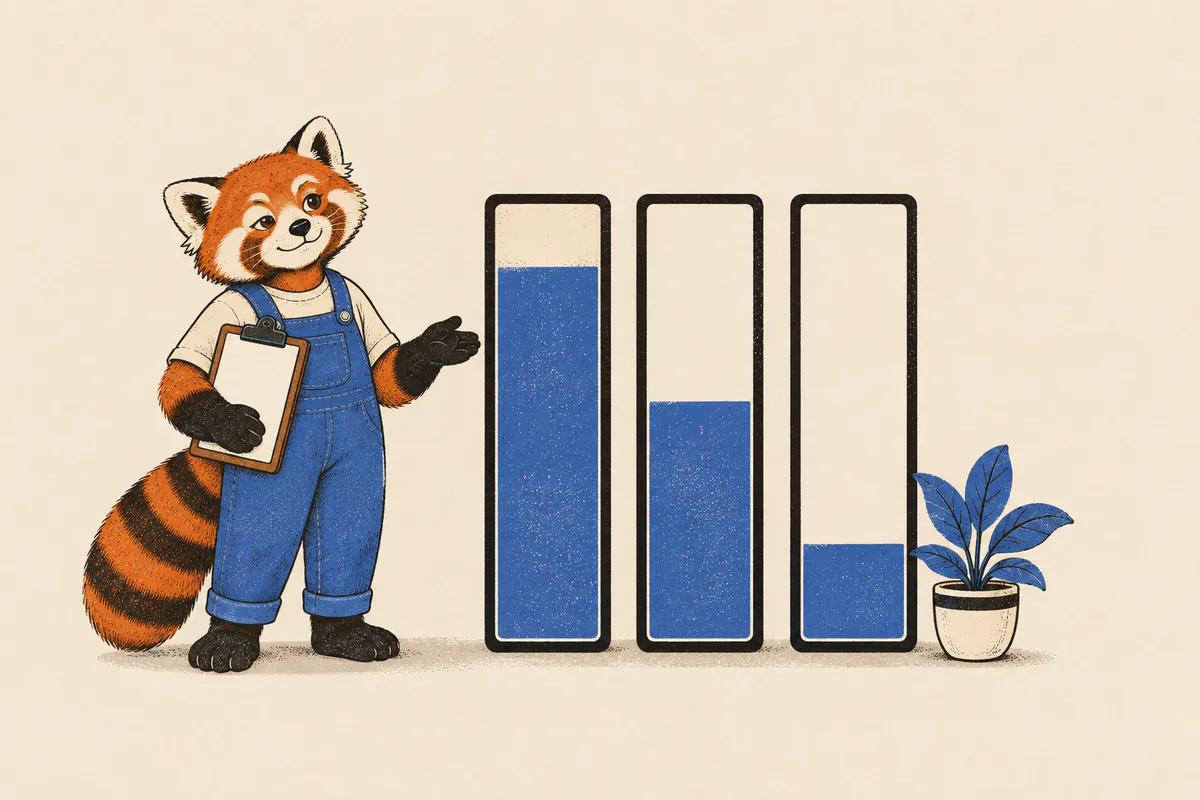
The academic use of “burnout” goes back to Freudenberger (1974), who described the physical fatigue and behavioral changes he saw in clinic staff after long stretches of total dedication, and called it staff burn-out. Maslach and other researchers later developed the Maslach Burnout Inventory (MBI), which breaks burnout into three measurable dimensions: exhaustion, cynicism (earlier called depersonalization) and reduced efficacy. Much of that research focused on helping professions such as health care before it spread to the general workplace (Maslach & Leiter, 2016). The WHO’s three dimensions roughly match these three subscales.
Many popular articles describe the stages of burnout as a fixed sequence, as if you always get tired first, then cold, and only at the end start doubting yourself. Research more often treats the three as lines that can each run high or low. Using latent profile analysis, Leiter and Maslach (2016) sorted respondents into five patterns:
| Pattern | What runs high | What a workday might look like |
|---|---|---|
| Engaged | None of the three | Tiredness clears with rest; you still care and feel capable |
| Overextended | Exhaustion only | Working hard, very tired, still wants to do well |
| Disengaged | Mental distance only | Not that tired, but no longer cares |
| Ineffective | Low efficacy only | Constantly feels it isn’t good enough |
| Burnout | All three | Tired, cold, and convinced they’re useless |
They also found that the group with only high mental distance was closer to full burnout than the group with only high exhaustion. Boil burnout down to “very tired,” and you miss the people who aren’t especially tired but have already closed the door on their job.
Burnout symptoms: what the four facets look like on a workday
Burnout symptoms can be grouped into four facets: exhaustion, mental distance, reduced efficacy, and a fourth that more recent research has added, losing control over focus and emotions.
That fourth facet comes from the newer Burnout Assessment Tool (BAT). Schaufeli, Desart and De Witte (2020) built on earlier interviews with 49 practitioners about how they saw burnout and arrived at four core dimensions: exhaustion, mental distance, cognitive impairment and emotional impairment. Testing them on a sample of 1,500 employees in Flanders, they found the four were best represented by one overall burnout factor. The BAT does not treat efficacy as a core dimension, while the WHO keeps it. Our quiz includes both: it keeps the WHO’s efficacy dimension and merges the BAT’s cognitive and emotional impairment into a single facet, Focus & mood.
| Facet in our quiz | Name in research | What it looks like at work | Often mistaken for |
|---|---|---|---|
| Exhaustion | Exhaustion | A full night’s sleep and still tired; half of Saturday spent recovering | Just a busy stretch |
| Mental distance | Cynicism, depersonalization | On mute in every Zoom call, more sarcastic about the company each week | Not caring, slacking off |
| Self-doubt | Reduced professional efficacy | Second-guessing everything you send; finishing a task only means the next one | Losing your edge |
| Focus & mood | Cognitive and emotional impairment | Reading one email three times, snapping at family | Carelessness, a short temper |
Looking at the four facets separately helps because each one calls for a different response. Exhaustion needs real rest. Mental distance often comes from caring for a long time and being let down over and over, so the work is finding one small part of the job you still care about. When self-doubt runs high, the grader in your head is usually too harsh, and concrete outside feedback does more than another round of self-review. Trouble with focus and mood usually starts to ease when you cut how many things you juggle at once and turn off the notifications that keep interrupting you.
The scenes many American office workers know best: it’s 10 p.m., Slack is still pinging, and you reply “on it” from bed. Or it’s Sunday evening, you think about Monday’s standup, and your chest tightens before anything has happened. None of these moments equals burnout on its own, but once they become your weekly schedule, the four facets can start lighting up.
Burnout vs depression, stress and plain tiredness: how to tell them apart
What separates burnout from depression, stress and plain tiredness is how far the low feeling reaches, how long it lasts and whether rest refills you; how tired you feel is the least reliable clue.
| State | Main feeling | After rest | Where it shows up |
|---|---|---|---|
| Ordinary work stress | Tense and rushed, still driven | Fades once the crunch ends | Tied to a project or busy season |
| Simply overtired | Physically tired, sleepy | Sleep or a few days off fixes it | Mostly physical |
| Job burnout | Tired, detached, doubting yourself | Refills less and less | Mostly around work |
| Depressed mood | Low, little interest in most things | Even time off doesn’t lift it | Spreads beyond work |
This table is a rough guide for watching yourself, not a diagnostic standard. The last two rows are the hardest to separate, because researchers themselves are still debating it. Bianchi and colleagues (2021) pooled data from 14 samples covering 12,417 people and found that exhaustion, the core of burnout, correlated with depressive symptoms at .80, more strongly than exhaustion correlated with the other two burnout dimensions. On that basis, they argued that burnout and depression overlap too much to be cleanly separated. Another meta-analysis, of studies from 2007 to 2018, found moderate correlations instead (burnout with depression r = .52, with anxiety r = .46) and concluded that the two are related but still distinct concepts (Koutsimani et al., 2019). Both camps have evidence. The safest reading is that burnout and depression often show up together, and you can’t reliably sort out which one you have on your own.
What you can watch is range. If the low mood follows work, and you can still laugh on vacation or with friends, that looks more like burnout. If it has followed you into your weekends, things you used to enjoy no longer appeal, and your sleep or appetite has clearly changed, it’s time to see a primary care doctor, a psychiatrist or a licensed therapist, not to write it off as “I’m just tired.”
A few questions can help you describe the difference to a professional:
- Does Saturday feel different from Tuesday, or is every day the same shade of gray?
- When something good happens outside work, a friend’s visit, a game, a good meal, do you still feel it?
- Have you stopped doing things you used to enjoy, even ones that have nothing to do with your job?
- Are you sleeping or eating very differently than you were a few months ago?
The more of these point away from work and toward your whole life, the more important it is to get a professional assessment instead of trying to fix it with a lighter schedule alone.

Another common misconception is that a blood or saliva test can confirm burnout. Some websites suggest using saliva or urine cortisol tests to figure out which “stage” of burnout you’re in. Danhof-Pont, van Veen and Zitman (2011) reviewed 31 studies and 38 candidate biomarkers and found none that could serve as a marker of burnout, mainly because the studies’ methods differed too much to compare. Pooled analyses also showed no difference between people with burnout and controls in the cortisol awakening response, blood cortisol or blood pressure. At least in this systematic review, there is no evidence for using a single saliva or blood test to place you at a “stage” of burnout; the usual assessment is still a questionnaire plus a conversation with a professional.
What causes burnout at work: six places your energy leaks
Burnout at work is mostly about working conditions. Maslach and Leiter (2016) group work life into six areas: workload, control, reward, community, fairness and values. The more areas where a person and a job stay mismatched over time, the more likely burnout becomes; the more that match, the more likely engagement is.
Our quiz renames two of the six to match how people describe them: reward becomes Recognition, because for many people the question is whether anyone notices their effort, on top of what they are paid, and community becomes Support.
| Area | When it’s draining you | A small move to try this week |
|---|---|---|
| Workload | Salaried and always on, never caught up, pings after hours | Set this week’s priorities together with your manager |
| Control | Someone else decides how and when you do everything | Ask to schedule one routine task yourself |
| Recognition | Doing a lot but feeling invisible; your review can’t name your impact | Send your manager a short list of recent wins and results |
| Support | Stuck and handling it alone | Ask one person you trust about something you’re stuck on |
| Fairness | The most reliable people get handed more | Ask one-on-one how work or reviews are decided |
| Values | Often asked to do things you don’t believe in | Write down the one that bothers you most and one small change |
The four facets and the six areas are two different layers. The facets answer “where does it hurt?” and the areas answer “where is the energy leaking?” Two people can both feel like their battery is at zero: for one, the workload really is off the charts; for the other, the load is modest but every decision has to wait for someone else’s sign-off, so the drain is control. The first needs to negotiate a lighter load, the second needs more authority, and the fixes point in completely different directions.
A few of the six areas connect to personality. If you hate saying no and answer every message within seconds, the boundary around your workload is often the one you gave up first, and the people-pleaser guide has ready-to-use ways to decline. If open-office noise and constant interruptions wear you down faster than most, the focus and mood facet may drain quickly, and the highly sensitive person guide covers how to adjust your surroundings. If values stays in the red for a long time, the problem may lie in the direction of your work rather than this company, and the talents guide can help you put what you’re good at and what you care about into concrete words.
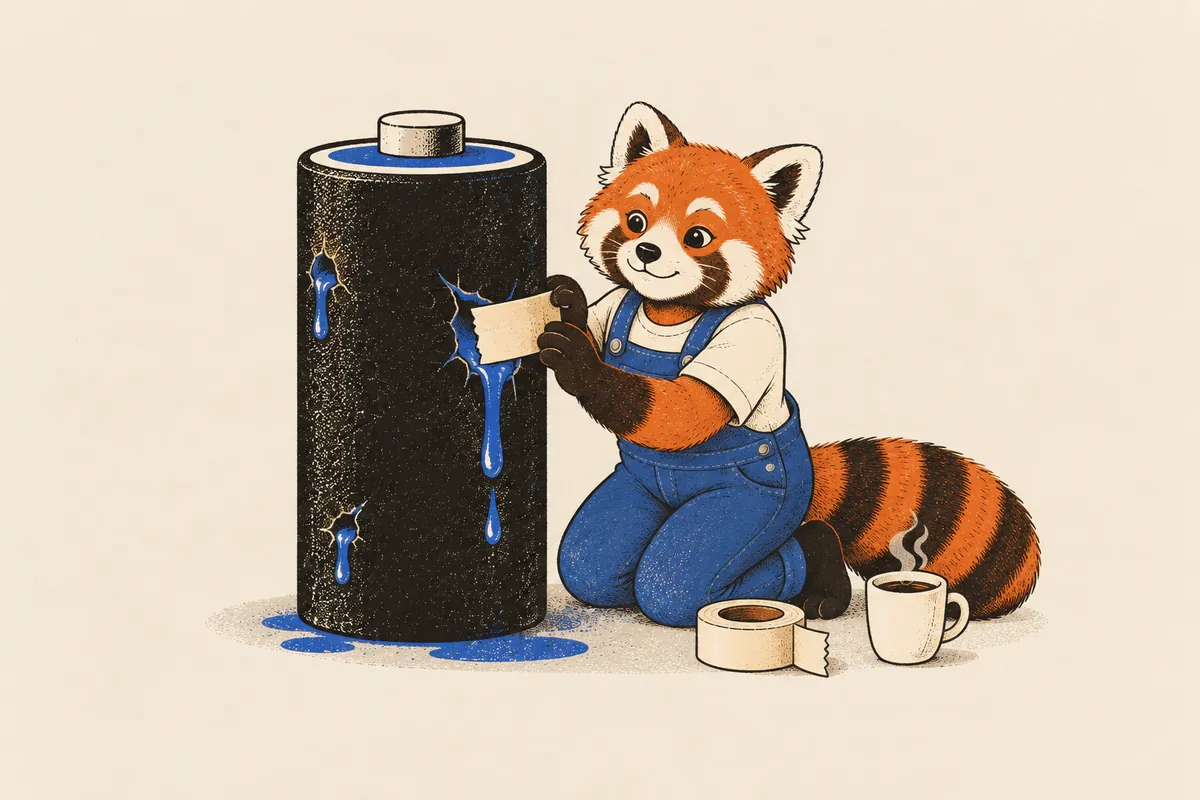
Does time off still refill you? A practical sign of burnout
Rather than how tired you feel on any given day, how many days you last after a weekend or PTO is an easier sign to track.
A common mistake is expecting the benefits of time off to stick around. De Bloom and colleagues (2009) combined seven studies and found that vacations have a small positive effect on health and well-being, but it fades quickly once people are back at work. So dragging on your first day back is common and doesn’t mean you’re especially fragile. The pattern worth paying attention to is different: you sleep in all weekend and still feel as empty on Monday morning as you did on Friday night, or you take three days of PTO and can’t make it two days after you return. When refilling can’t keep pace with draining, burnout may be deepening.
Whether rest helps also depends on what kind of rest it is. Sonnentag and Fritz (2007) split recovery after work into four experiences: psychological detachment from work, relaxation, mastery (learning something new or taking on a small challenge) and control (deciding for yourself how to spend your time). Compare that with a typical weekend: you’re home, but your phone keeps buzzing with work messages, so detachment is missing. Or you sleep all day and scroll until 2 a.m., which rests your body but leaves mastery and control close to zero. When people say time off doesn’t help, it’s often because they took the day off while their mind stayed at work.
If you lie in bed replaying the day’s meetings or turning over one line from your manager, detachment will be especially hard, and the overthinking guide collects small things you can do that same night. For telling apart “I feel heavy even during time off” from “I only feel heavy once I’m back at the office,” the should I quit guide goes into more detail.
How our burnout index works: four levels are a scale, not a diagnosis
The Type of You Burnout Test uses 31 self-reflection questions to calculate a burnout index from 0 to 100; the four levels are this site’s own scale, not clinical cutoffs, and the result is not a diagnosis.
The 31 questions come in four parts. The first 16 are the core: four each for exhaustion, mental distance, self-doubt, and focus and mood. Each facet includes one reverse-worded statement, and you answer on a five-point frequency scale from “Never” to “Always.” The burnout index is the total of these 16 answers divided by 64, times 100; each facet is its own four answers divided by 16, times 100. Next, two questions ask how long you have felt this way and how well time off restores you. Twelve questions cover the six areas, one negative and one positive statement for workload, control, recognition, support, fairness and values. The last question asks how much you are carrying outside work. None of these last 15 count toward the index; they are used only to interpret it. Every question is an original everyday scenario written for this site, and none uses wording from the MBI, the BAT or any other inventory.
| Burnout index | Level in our quiz | What it means |
|---|---|---|
| 0–29 | Low | No clear signs of burnout |
| 30–49 | Early warning | Early signs are showing |
| 50–69 | Clear signs | Worth talking to a doctor or your EAP |
| 70–100 | Strong signs | Not something to carry alone anymore |
When we ran two answer patterns through the quiz’s actual scoring code, the results were a little surprising.
- Answering “Sometimes” to all 16 core questions gives a burnout index of exactly 50, the start of “Clear signs,” with each facet also at 50. The scale is linear and “Sometimes” is its midpoint, so feeling all four things sometimes already counts as more than mild.
- Picking the heaviest answer on the four exhaustion questions and the lightest on the other 12 gives an index of only 25, in the “Low” band. Yet the exhaustion facet hits 100, and the result type is Battery at Zero, not Holding Steady, because Holding Steady requires an index under 30 and all four facets under 50.
The second example is the overextended pattern from earlier: the total looks fine while one line is already maxed out. That’s why the quiz result always lists the four facet scores separately and marks the one that stands out most.
There are six result types: Holding Steady (low index, no facet running high), Running on Reserve (index of 60 or more, every facet at 50 or above), and four types named after the highest facet: Battery at Zero, Pulled Back, Second-Guessing and Stretched Thin. Whatever your score, the free result screen includes crisis line information.
How to recover from burnout: today, this week, this month, and when to get help
Recovering from burnout comes down to stopping the bleeding, then adjusting: win back rest first, then change the work condition that drains you most, and once the signs are clear, bring in a doctor or therapist.
Today, keep the steps small enough that they don’t require willpower. Turn off half your work notifications, and at minimum stop work chat from buzzing after hours. Before bed, spend one minute writing down the one thing that drained you most today and the one that recharged you. After a week, the tiredness usually clusters around certain tasks, certain people or certain times of day, and you have something concrete to show your manager.
This week, pick the one area of the six that scores worst for you and work on that alone. If workload is off the charts, book a one-on-one with your manager and bring a list of what’s on your plate with rough time estimates, then decide together what comes first and what waits; a concrete list is easier to negotiate than “I’m swamped.” If mental distance stands out, identify the moment you decided to stop caring, and tell a coworker or manager you trust what disappointed you. If self-doubt runs highest, ask for one piece of specific feedback: which part of what you just delivered actually helped.
This month, schedule a stretch of real, uninterrupted time off, with a coworker covering for you and work chat muted. If your burnout index is already at “Clear signs” or above, have a conversation with your manager about reducing your load, changing your role or taking leave; HR can explain what leave and accommodation options your workplace offers. Wanting to leave is normal too, but try not to make the final call on your most exhausted night. To sort out whether the problem is the job itself or your life as a whole, “Should You Change Your Job, or Change Your Life?” can help. To see which parts of this job are still holding up, “Should I Quit My Job? Job Happiness Quiz” breaks it into five areas. And if you decide to go, the changing jobs guide covers how to prepare before and after you leave.
When should you get professional help? If any of the following applies, make an appointment with a primary care doctor, a psychiatrist or a licensed therapist, or start by talking to a counselor through your employer’s employee assistance program (EAP), which is often free and confidential:
- This has lasted several months and time off no longer refills you.
- The low mood follows you into weekends and relationships, and things you used to enjoy no longer interest you.
- Your sleep has been off for a long time: you can’t fall asleep, you wake too early, or you sleep a lot and still feel tired.
- You’ve started relying on alcohol, staying up late or binge eating to get through the day.
Before the appointment, write down three things: how long you’ve felt this way, how you’ve been sleeping, and what you used to manage that you can’t anymore. Appointments are short, and reading from your notes helps the doctor catch what matters. You can also ask directly whether you should take some time off.
If you feel you can’t hold on, or you have thoughts of hurting yourself, call or text 988 to reach the 988 Suicide & Crisis Lifeline, or chat at 988lifeline.org. It’s free, confidential and available 24/7. You can also text HOME to 741741 to reach Crisis Text Line, which is free and available 24/7 as well. In an emergency, call 911.
Try the quiz
FAQ
What is job burnout?
Job burnout, often just called burnout at work, is what builds up when chronic workplace stress is never properly handled. It shows up as exhaustion, growing cynicism or distance toward your job, and a sense that you are no longer doing it well. The WHO lists it in ICD-11 as an occupational phenomenon and uses the term only for work.
Is burnout a medical diagnosis?
According to the WHO, burnout sits in the ICD-11 chapter on factors influencing health status or contact with health services, and it is not classified as a medical condition. The insomnia, low mood and physical symptoms that come with it are real, though, and if they affect your life, a doctor can assess whether you need treatment or time off.
Burnout vs depression: what’s the difference?
Researchers still debate how much the two overlap. In daily life, watch two things. Does the low mood follow work and ease on vacation or when you do things you enjoy? Or has it spread into weekends and relationships, so little interests you anymore? If it is the second, or you have thoughts of hurting yourself, see a primary care doctor, psychiatrist or licensed therapist.
How do you recover from burnout?
Start by winning back rest, for example by muting work chat after hours and keeping one block of the weekend completely work-free. Then find the work condition that drains you most, whether workload, control, recognition, support, fairness or values, and bring a concrete list to your manager. If it has lasted months and time off no longer helps, involve a doctor or therapist.
Do I have to quit my job if I’m burned out?
Not necessarily. Burnout usually comes from a few specific work conditions. Some are negotiable, like workload and scheduling; others are hard to change, like tasks that keep going against your values. Work out which one is draining you first, and avoid making the final call on your most exhausted night. If your body and mind can’t keep going, taking leave is also an option.
I’m still exhausted after vacation. Am I burnt out?
Not necessarily. Research has found that the benefits of a vacation fade quickly once you are back at work, so feeling flat after time off is common. The bigger warning sign is when weekends or PTO don’t refill you at all, Monday puts you right back where you were, and it goes on for weeks. Then the thing to change is usually your everyday working conditions.
References
- Burn-out an "occupational phenomenon": International Classification of Diseases · World Health Organization · 2019 · www.who.int
- Is Burnout a Depressive Condition? A 14-Sample Meta-Analytic and Bifactor Analytic Study · Clinical Psychological Science (Bianchi, Verkuilen, Schonfeld, Hakanen, Jansson-Fröjmark et al.) · 2021 · doi.org
- Understanding the burnout experience: recent research and its implications for psychiatry · World Psychiatry (Maslach & Leiter) · 2016 · doi.org
Show 10 moreShow fewer
- ICD-11 for Mortality and Morbidity Statistics: QD85 Burnout · World Health Organization · 2024 · icd.who.int
- The Relationship Between Burnout, Depression, and Anxiety: A Systematic Review and Meta-Analysis · Frontiers in Psychology (Koutsimani, Montgomery & Georganta) · 2019 · doi.org
- Burnout Assessment Tool (BAT)—Development, Validity, and Reliability · International Journal of Environmental Research and Public Health (Schaufeli, Desart & De Witte) · 2020 · doi.org
- Latent burnout profiles: A new approach to understanding the burnout experience · Burnout Research (Leiter & Maslach) · 2016 · doi.org
- Biomarkers in burnout: A systematic review · Journal of Psychosomatic Research (Danhof-Pont, van Veen & Zitman) · 2011 · doi.org
- Do We Recover from Vacation? Meta-analysis of Vacation Effects on Health and Well-being · Journal of Occupational Health (de Bloom, Kompier, Geurts, de Weerth, Taris & Sonnentag) · 2009 · doi.org
- The Recovery Experience Questionnaire: Development and validation of a measure for assessing recuperation and unwinding from work · Journal of Occupational Health Psychology (Sonnentag & Fritz) · 2007 · doi.org
- Staff Burn-Out · Journal of Social Issues (Freudenberger) · 1974 · doi.org
- 988 Suicide & Crisis Lifeline · 988 Suicide & Crisis Lifeline · 2026 · 988lifeline.org
- Crisis Text Line · Crisis Text Line · 2026 · www.crisistextline.org
Further reading
 Overview
Signs you should quit your job, and what to check first
The clearest signs you should quit your job show up in one area, not the total: pay, hours, growth, people or well-being. Burnout, research and next steps.

Changing jobs: when a new offer is worth it
Changing jobs is worthwhile when the next role improves what wears you down. Research, offer comparisons and a handoff plan help separate hope from evidence.
 Overview
People pleaser: 4 traits, causes and how to stop
A people pleaser has a learned habit, not a diagnosis: four facets, what research says about causes, fawn vs kindness, and scripts for saying no.

What is overthinking? Thinking it through vs. replaying it
In this article, overthinking means going over something for a long time without moving forward. Four scenarios, the rumination line, and steps for today.
 Overview
Highly sensitive person: 4 traits, research and daily tips
A highly sensitive person (HSP) has an inborn temperament, not a disorder. Four traits, the orchid-tulip-dandelion research and the gap with introversion.