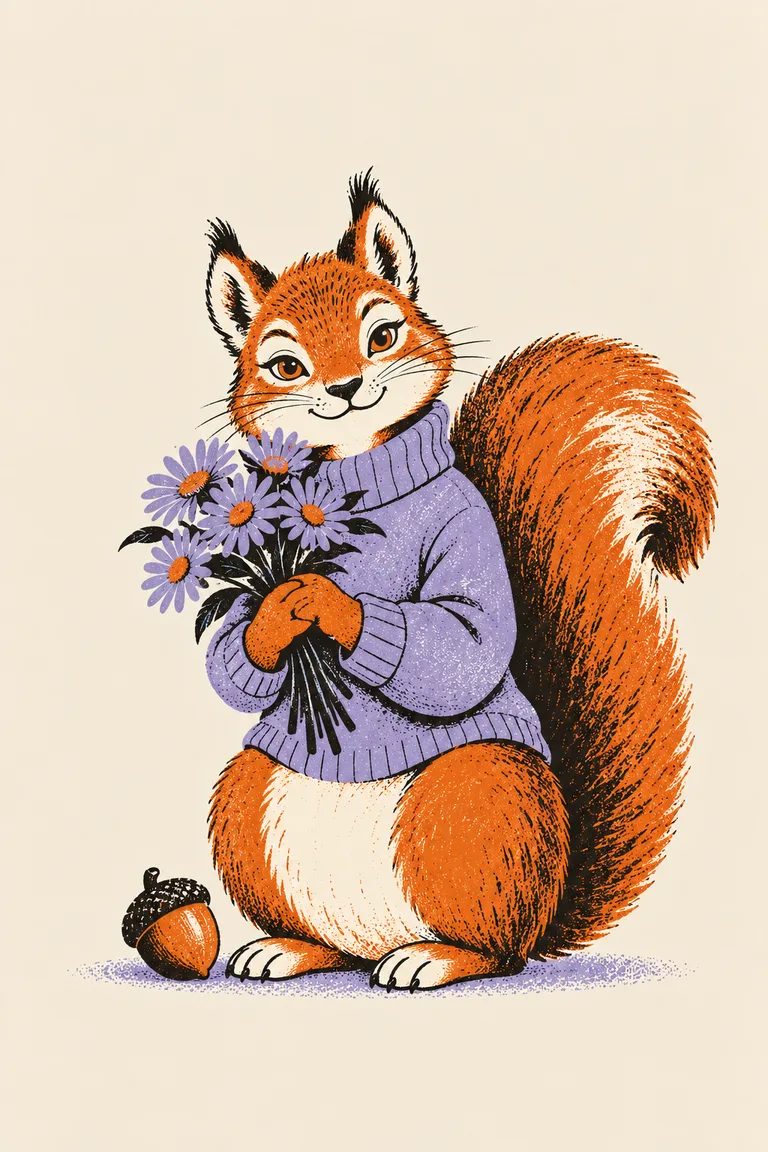
A red squirrel in a lavender sweater hugs a bunch of purple asters, an acorn on the ground beside it

September Birth Flowers

  • Aster
  • Morning Glory
  • Forget-me-notAlso listed

September's birth flowers are the aster and the morning glory, with the forget-me-not added by American florists; the aster stands for wisdom and patience.

Aster is the September consensus, listed by both almanacs and by the Society of American Florists. The almanacs add the morning glory as a second flower, and the florists' chart adds the forget-me-not. The aster also carries a naming problem. American gardeners use the word for perennial asters, many now classed as Symphyotrichum, whereas Japanese florists use the same word for the annual China aster, Callistephus chinensis. Charts translated from Japanese sources can quietly swap one plant for the other.

Modern readings for the aster are generous. The Old Farmer's Almanac gives love, wisdom, patience and beauty; Farmers' Almanac says wisdom, faith and valor; the Society of American Florists picks contentment. The morning glory is trickier. Farmers' Almanac reads it as affection, but Greenaway's 1884 book used the similar-looking word affectation. The forget-me-not is the clearest of the three: true love in Greenaway, remember me forever for the florists.

The flowers

AsterAster(廣義)

Modern American:
Love, wisdom, patience, and beauty
Modern American:
Wisdom, faith, valor
Modern American:
Contentment

Aster is used broadly here; most American garden asters now belong to Symphyotrichum. Purple is the color usually pictured. The Old Farmer's Almanac lists love, wisdom, patience and beauty, and the Society of American Florists contentment. Greenaway's 1884 book has only a China aster entry, which refers to a different plant, the annual Callistephus chinensis, so its meanings do not carry over.


Morning GloryIpomoea

Modern American:
Affection
Modern American:
Love, both undying and unrequited

Morning glory is Ipomoea, shown in blue. Farmers' Almanac gives it a single word, affection. Greenaway's 1884 book is easy to misquote here: her entry says affectation, a quite different idea. The Old Farmer's Almanac describes the morning glory as a sign of love, both undying and unrequited, which gives it a bittersweet edge among September's flowers.

Forget-me-notMyosotisAlso listed

Victorian:
True love, forget me not
Modern American:
Remember me forever

Forget-me-not, genus Myosotis, is September's alternate on the Society of American Florists' list. Its meaning travels well. Greenaway's 1884 book wrote true love and forget me not, and the florists' guide reads it as remember me forever. Japanese flower language agrees, so the blue forget-me-not says the same thing in Victorian, American and Japanese traditions.

FAQ

Is the September aster the same as the Japanese aster?

Usually not. American lists mean perennial asters, many now in Symphyotrichum. Japanese florists use aster for the annual China aster, Callistephus chinensis, a different plant with different flower meanings.

Does morning glory mean affection or affectation?

Both words appear. Farmers' Almanac reads it as affection, but Greenaway's 1884 book says affectation, meaning pretense. The Old Farmer's Almanac describes love that is both undying and unrequited.

Birth flowers and flower meanings are cultural traditions. Month lists follow The Old Farmer’s Almanac, the Farmers’ Almanac and the Society of American Florists; the daily calendar is from William Hone’s The Every-Day Book (1825).