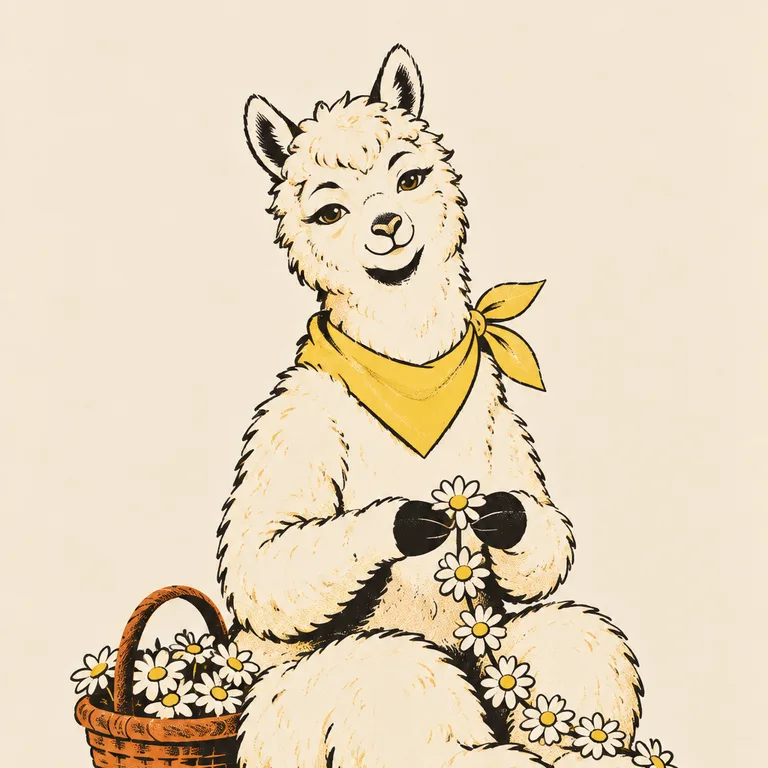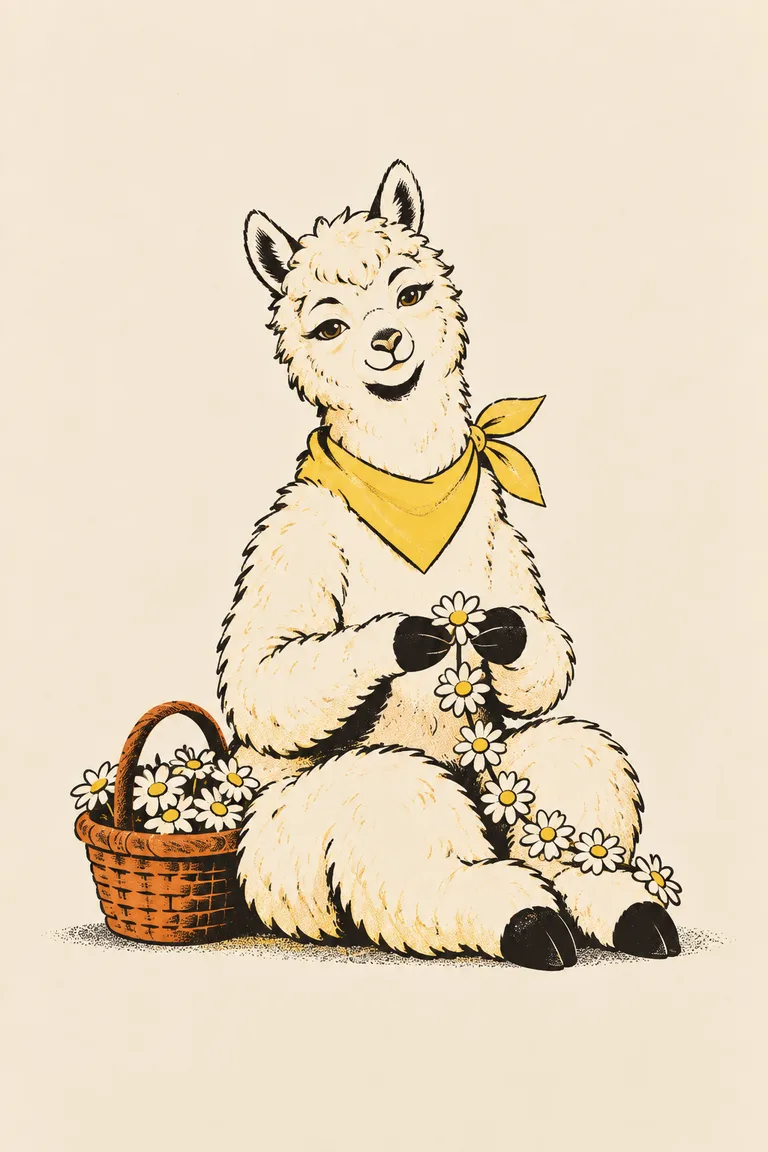
A cream alpaca in a yellow neckerchief sits threading white daisies into a chain, a basket of daisies beside it

April Birth Flowers

  • Daisy
  • Sweet Pea
  • PeonyAlso listed

April's birth flowers are the daisy and the sweet pea, with the peony as a florists' alternate; the daisy stands for innocence.

The daisy is the April flower everyone agrees on. Both almanacs and the Society of American Florists name it. The second slot splits by source: the Old Farmer's Almanac and Farmers' Almanac add the sweet pea, while the Society of American Florists adds peonies. The florists' list does not say whether it means the herbaceous peony or the tree peony, though the peonies found in American flower markets are mostly the herbaceous kind.

Innocence is the one meaning all four English sources share for the daisy, from Greenaway's 1884 book to the modern almanacs, which add purity and true love. The sweet pea has a more mixed record. The Old Farmer's Almanac lists blissful pleasure, kindness, gratitude and friendship. Greenaway gave it delicate pleasures, yet she also had a second entry reading departure, and Farmers' Almanac mentions a fond farewell. The sweet pea can say thank you or goodbye.

The flowers

DaisyBellis perennis(來源只寫 daisy,未給學名)

Modern American:
Innocence, purity, and true love

Daisy here means the common white daisy, usually identified as Bellis perennis, although the birth flower sources only say daisy. Innocence is the constant: Greenaway, the Society of American Florists and both almanacs all use the word. The Old Farmer's Almanac and Farmers' Almanac add purity and true love. Few birth flowers keep such a consistent meaning across more than a century of sources.


Sweet PeaLathyrus odoratus

Modern American:
Blissful pleasure, good wishes, kindness, gratitude, and friendship
Modern American:
Blissful pleasure and a fond farewell
Victorian:
Delicate pleasures

Sweet pea is Lathyrus odoratus, often shown in pink. Its meanings range widely: blissful pleasure and good wishes in the Old Farmer's Almanac, shyness for the Society of American Florists, delicate pleasures in Greenaway's 1884 book. Farmers' Almanac pairs blissful pleasure with a fond farewell, an echo of the Victorian reading of departure. Japanese florists, by contrast, treat the sweet pea as a January flower.

PeonyPaeoniaAlso listed

Modern American:
Prosperity and a happy marriage

Peony, genus Paeonia, appears in April only on the Society of American Florists' list, which names peonies without separating herbaceous from tree types. Greenaway's 1884 book read the peony as shame and bashfulness, a shy flower in Victorian terms. The same plant returns in November on the Farmers' Almanac list, where it carries the far happier sense of prosperity and a happy marriage.

FAQ

Why is the peony sometimes listed for April?

The Society of American Florists includes peonies in its April entry alongside the daisy. Neither almanac does, so most April charts show the daisy and the sweet pea. The peony also appears in November on the Farmers' Almanac list.

Is the sweet pea a goodbye flower?

It can be. Greenaway's 1884 book had one sweet pea entry for delicate pleasures and another for departure, and Farmers' Almanac pairs blissful pleasure with a fond farewell. For a birthday, the Old Farmer's Almanac readings of kindness and gratitude fit better.

Birth flowers and flower meanings are cultural traditions. Month lists follow The Old Farmer’s Almanac, the Farmers’ Almanac and the Society of American Florists; the daily calendar is from William Hone’s The Every-Day Book (1825).